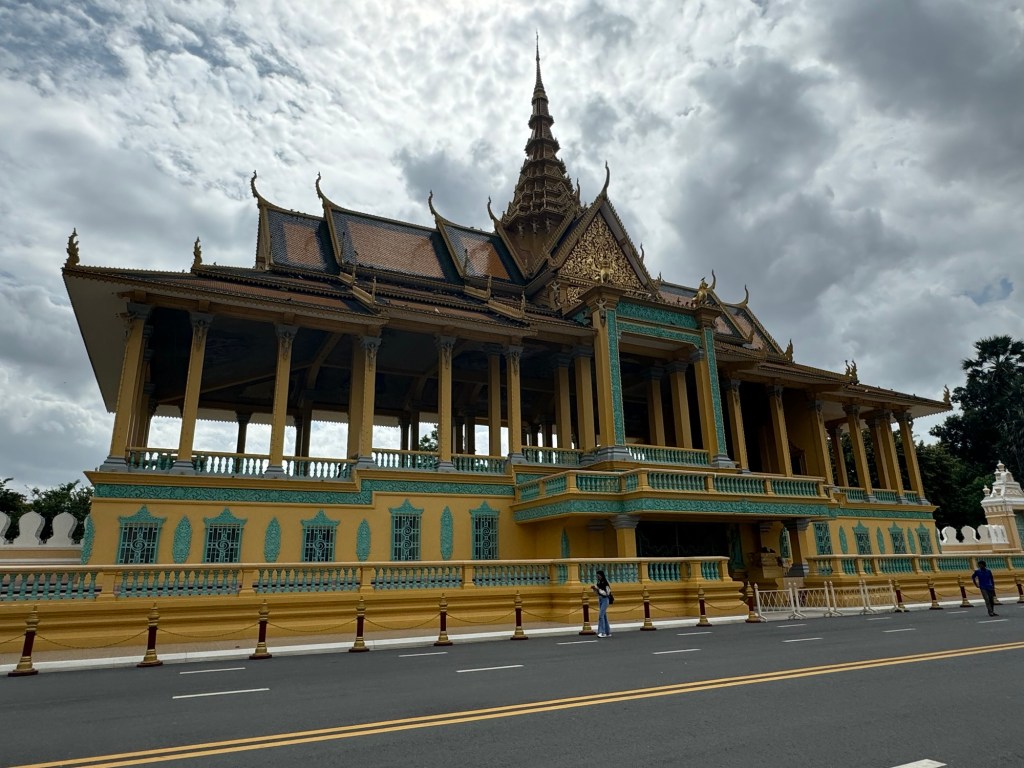
Before we start, here is a brief intro you’ll find at the start of all of my blogs!
This is a story-style travel blog featuring my adventure through Southeast Asia in the fall of 2024. I spent 1 week on my own in Laos, then joined a 14-day tour called Ultimate Cambodian Adventure from the company G Adventures, and a final 3-day solo stop in Singapore. You can read the blog in order, or about whichever destination intrigues you! Within my stories, I’ll offer some recommendations and some tips and tricks for a smooth journey. When I travel, I mostly do group tours and the reasons are:
* As a solo woman traveler, it is much safer especially if traveling long distances or to countries that can be dangerous in some areas
*The itineraries are amazing and usually include all of the things you’d want to see and do…and if not, there is free time to do as you wish
*You don’t have to worry about booking transport, finding hotels, etc. Sometimes that can contribute to the adventure, but it’s also nice to sit back and relax and let your Tour CEO be in charge
* And finally…the new people you meet on your tour become your family, and I’ve made lifelong friends in these journeys. For myself, this has equal importance with exploring new countries.
This morning, I head over to the airport for my short 1-hour flight to Phnom Penh, Cambodia. I choose Vietnam Airlines; nothing fancy but for a fast flight who really cares? It is comfy enough and the service is great.

Cambodia is located in Southeast Asia; it is a land of ancient wonders and vibrant traditions.
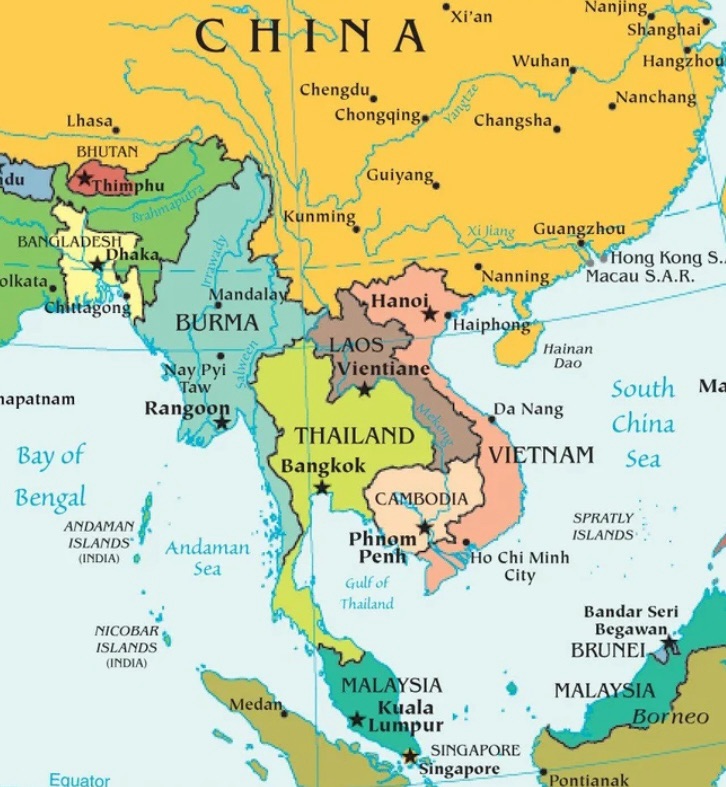
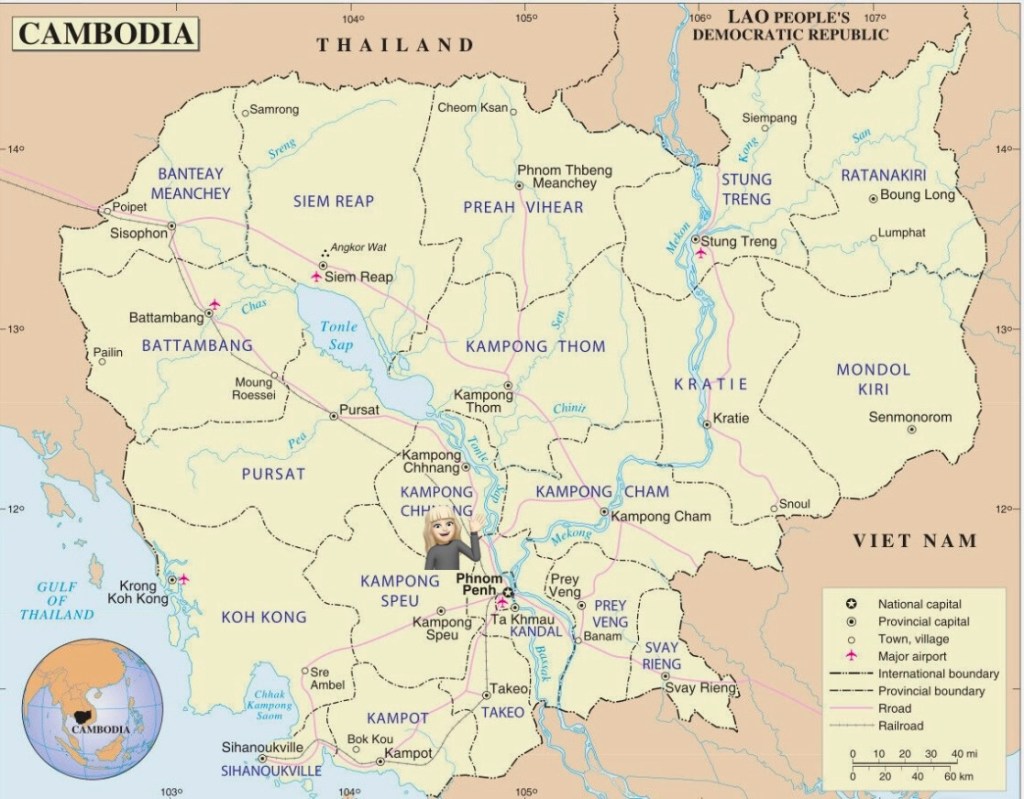
The history is rich, and the country is abundant with temples – the most famous being Angkor Wat, which is the largest religious monument in the world. In Cambodia you’ll find lush jungles, stunning natural landscapes, beautiful beaches, and the most kind and welcoming people you will ever meet. The population is around 17 million, with the majority being ethnically Khmer. In the mid 1860’s, Cambodia became a French protectorate, and gained independence after World War II. You’ll still find a lot of French influence in the country. Cambodia unwillingly became involved in the Vietnam War, which brought in a takeover by the communist Khmer Rouge in 1975. During this time, Cambodia experienced one of the world’s largest genocides, carried out by the Khmer Rouge. I will talk more about this atrocity further on in this blog. Life isn’t easy for Cambodians today, as there are still much corrupt practices in their everyday lives. Another problem has been the many unexploded landmines, but luckily the country is expected to be clean in the very near future.
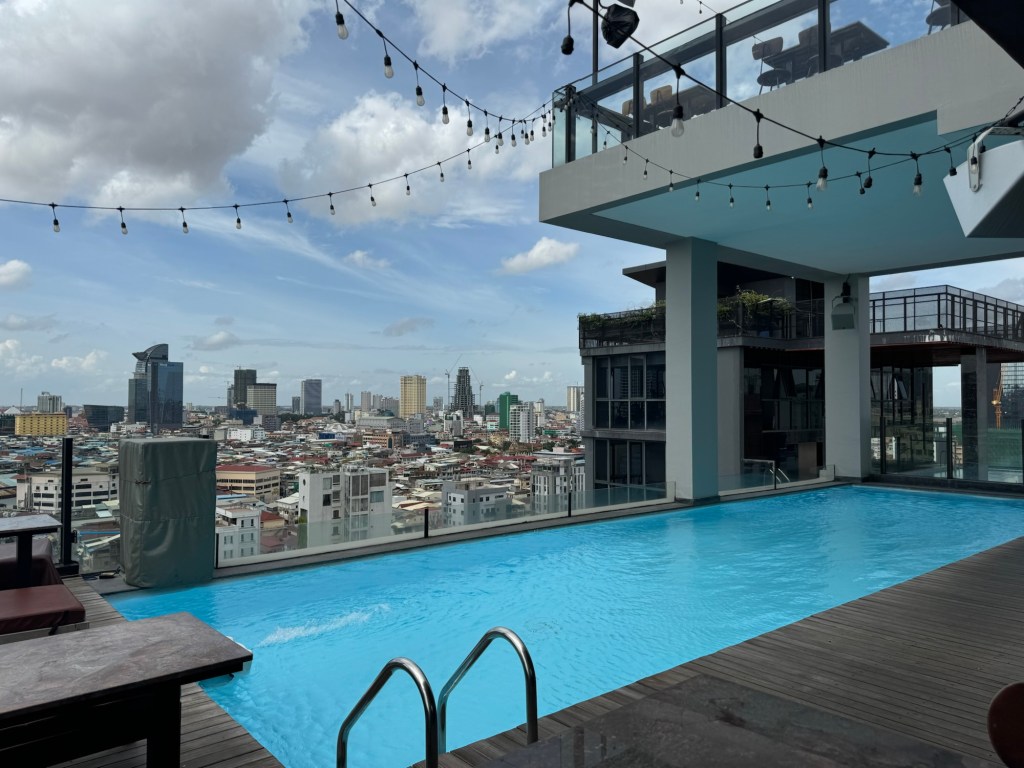
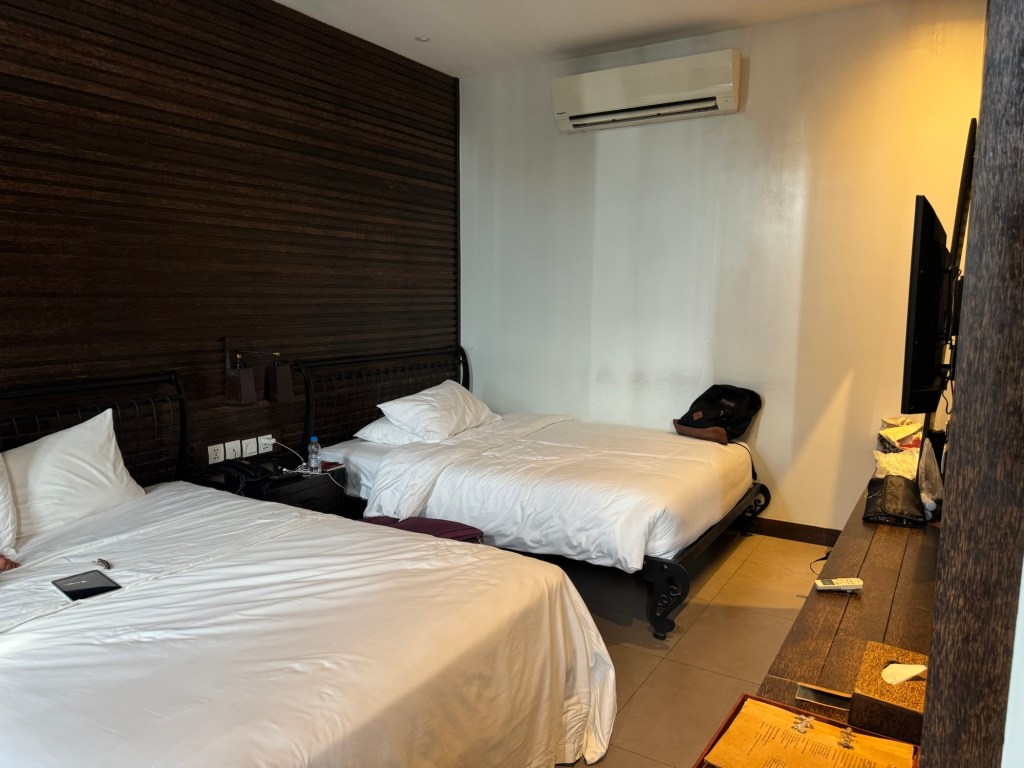
Upon arrival in Phnom Penh, I am picked up by a private van which I have arranged through G Adventures. Hassle free! I am brought to the SIM Boutique Hotel, which is much fancier than expected! It’s a high rise, with a rooftop bar and pool and sweeping views of the city.


I head to my room, and my roommate has already arrived. Her name is Nancy, she is from the USA. There is a very large age gap between us (she’s got 25 years on me and I’m no spring chicken haha ). We don’t have much in common, but she’s a really nice lady and we make it work for the next 2 weeks.
I go upstairs to the rooftop bar to have lunch and order my first Cambodian beer.

There is a chat group from G to connect with members of the tour, so I tell everyone I’m having a beer up here. I’m joined right away by Tristelle from Australia, and I instantly love her. I know we’re going to have a blast. Eventually we are joined by her roomie, Eline, from Belgium. She is also super cool, and she is the youngest of the group.
In the early evening, we have our first group meeting. Most tours will do this on the first day, so we get a chance to meet our tour leader, known as a CEO, and fellow travellers. We have a chat about what the next 14 days will look like before we head out for our first dinner together. I’ll be mentioning everyone throughout this blog series, so let me introduce you
Nancy, from Oregon USA
Tristelle, from Adelaide, Australia
Eline, from Herentals, Belgium
Steve and Kate, a couple from Regina, Canada
Vic, from Ottawa Canada who was actually born in Cambodia and this will be his first time back since then. It will be so much fun experiencing this with him
Dave, from Australia
Chris, from Australia
Jason, from Australia.
And introducing our amazing tour CEO Ratha, from Cambodia, who is an absolute treasure of a human. He will take such good care of us over the next couple of weeks.
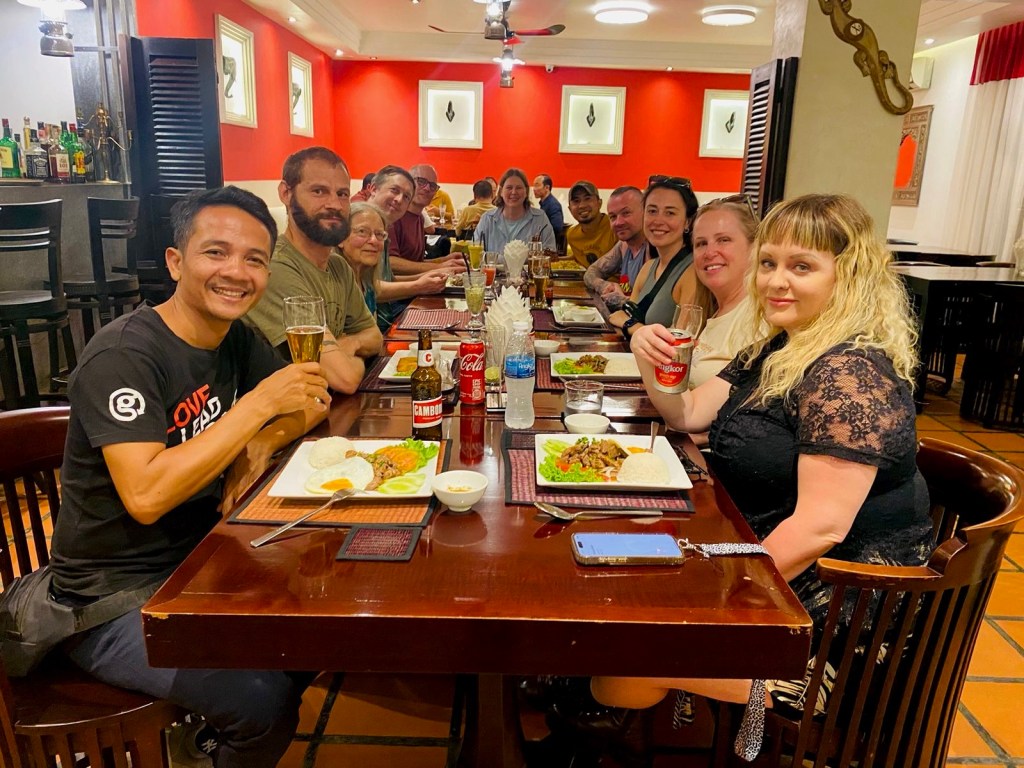
Ratha arranges for a fleet of tuk-tuks to pick us up and take us to Banana Tree restaurant for our first taste of Cambodian food. I try the beef lok lak -it comes from Vietnam originally but this is the Cambodian version.

It is amazing…the beef is so tender and the flavour is a mix of soy and oyster sauce, garlic and black pepper. Served with rice and egg. We have a great time tonight, getting to know each other and bonding over a fantastic meal.
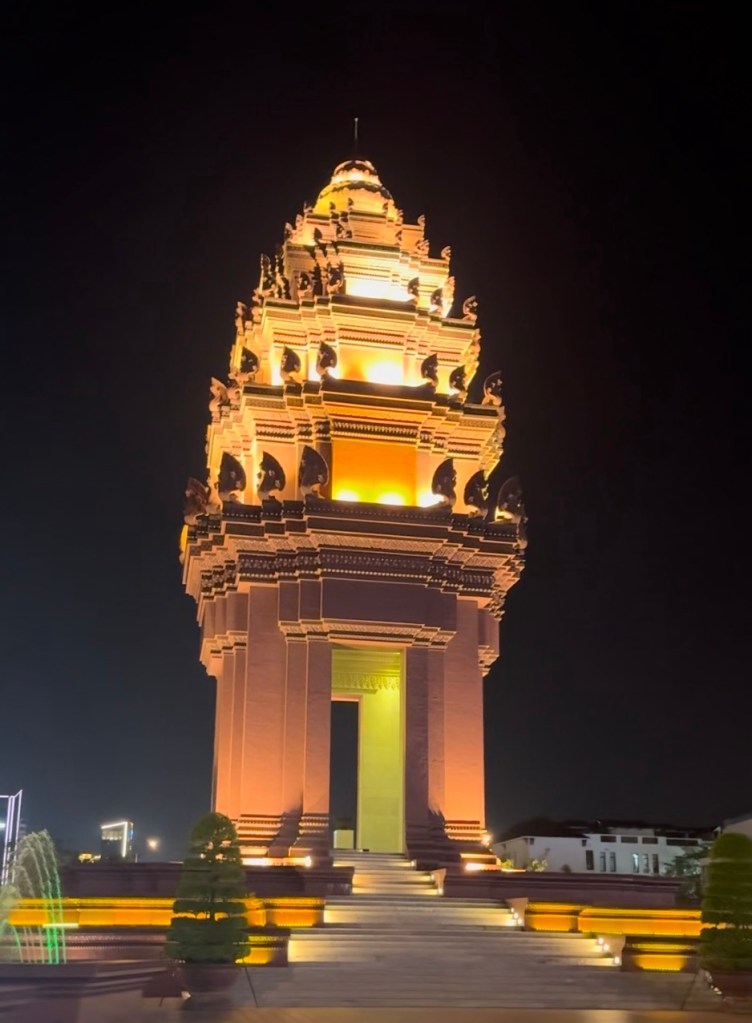
After dinner, Ratha walks us over to the Independent Monument, built in 1958 to memorialize Cambodia’s independence from France in 1953. It’s located in a roundabout in the centre part of the city and looks really cool lit up in the night sky.
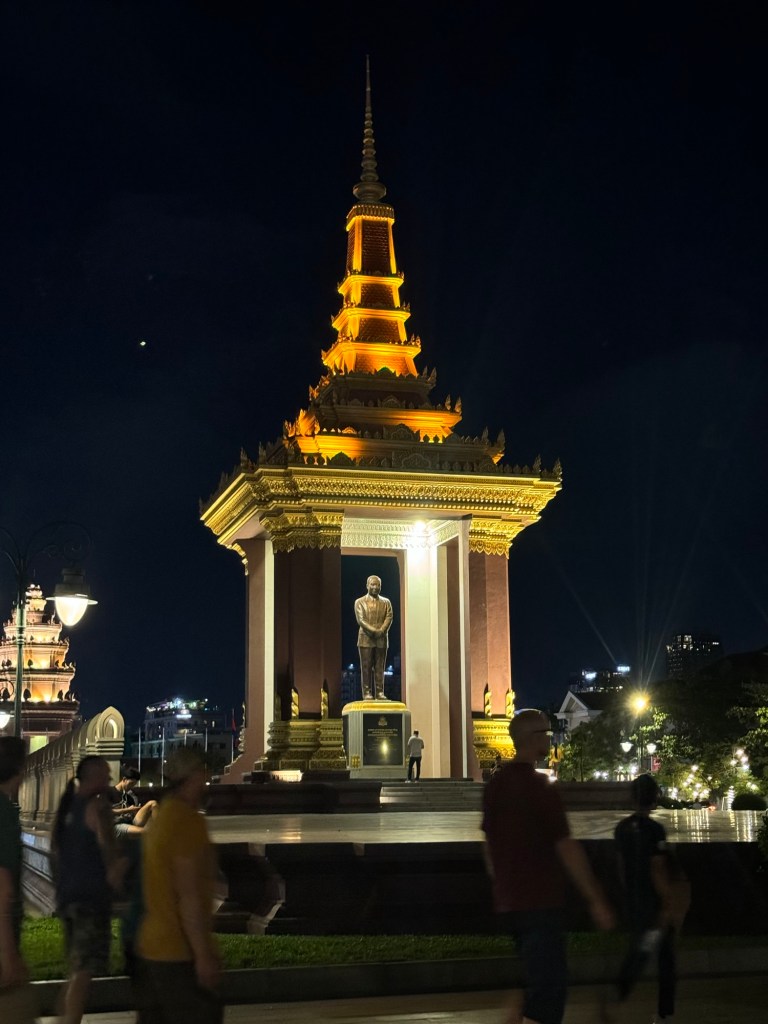
Behind this monument is the Norodom Sihanouk Memorial, a tribute to the former king.
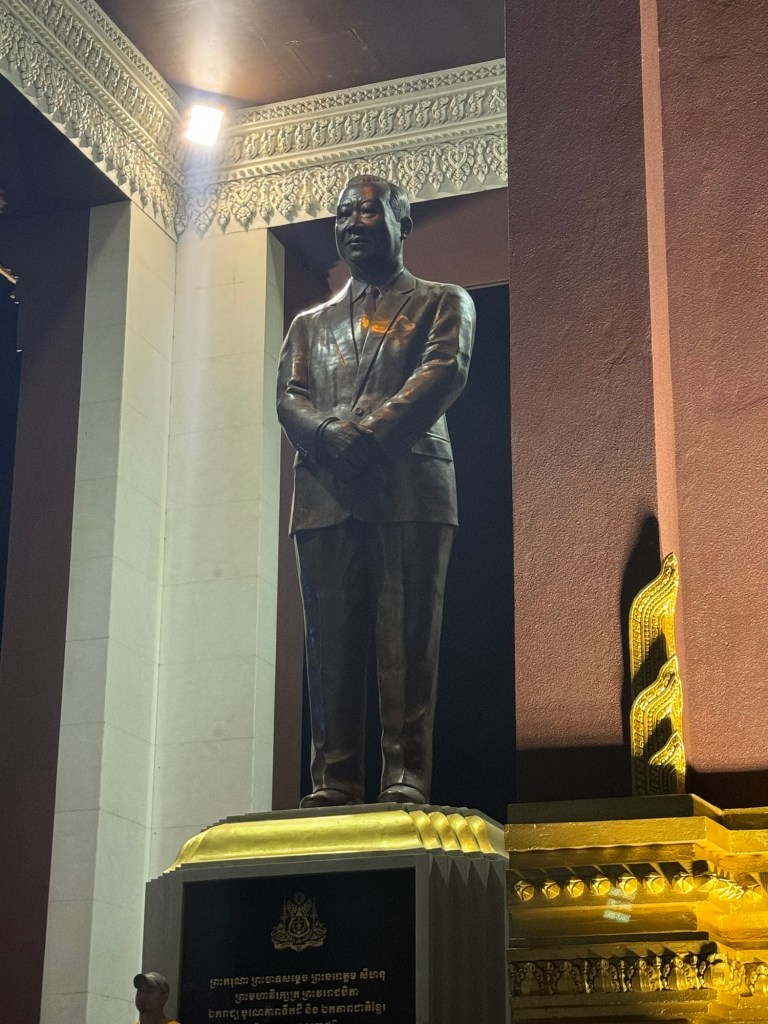
We hop back into out tuk-tuks and head to the hotel for the evening to get ready for tomorrow when we will explore Phnom Penh!
This morning we have a buffet breakfast at the hotel and then it’s time to hop on our van and meet our driver for the next couple of weeks, Saren. We are off to explore the city!!
Phnom Penh (pronounced Pa Nom Pen) is the capital of Cambodia, and is a city pulsing with energy and an unexpected vibrancy. Here you’ll find trendy cafes, bustling markets, beautiful Khmer architecture and a fun nightlife. The city offers a glimpse into its sobering past, when during the Cambodian Civil War, the Khmer Rouge came in and forced citizens to flee while also taking in prisoners, resulting in one of the worst genocides in history. Around one quarter of the population was killed.
This brings us to our first stop of the day, the Tuol Sleng Prison.


A former school, it was used to house prisoners when the Khmer Rouge stormed Phnom Penh on April 17, 1975. I’ll provide you with a brief history lesson as best I can….
The Cambodian Civil War was a conflict that began in 1970 between the U.S. backed Lon Nol government and the communist Khmer Rouge forces, backed by North Vietnam and China. It started because of internal political tensions in Cambodia, and spillover effects from the Vietnam War. This war destabilized the country, with relentless bombing by the U.S. When the Khmer Rouge (led by Pol Pot) gained power in 1975, they tried to create an agrarian utopia by eradicating any perceived enemies, intellectuals, and urban population which ultimately lead to the Cambodian genocide.
If you want more detailed information, click on this video link.
https://youtu.be/Fiflq0KX_bw?si=3FL_xTWmFEJ2rDch
When the Khmer Rouge invaded Phnom Penh, it forced the citizens to flee the city, known as a death march. This process killed tens of thousands of civilians and those who survived had no choice but to live in poverty in the countryside. Cambodia was already in chaos and the cost of living was extremely high. The Khmer Rouge wanted full power, and were killing anyone who was a threat to them but also anyone who wasn’t of use to them, such as young children, and the sick/handicapped.
Those who were captured were brought to Security Prison 21 – an estimated 20,000 were imprisoned here over those few years. They were blindfolded and photographed and taken for interrogation – they were forced to make false confessions.

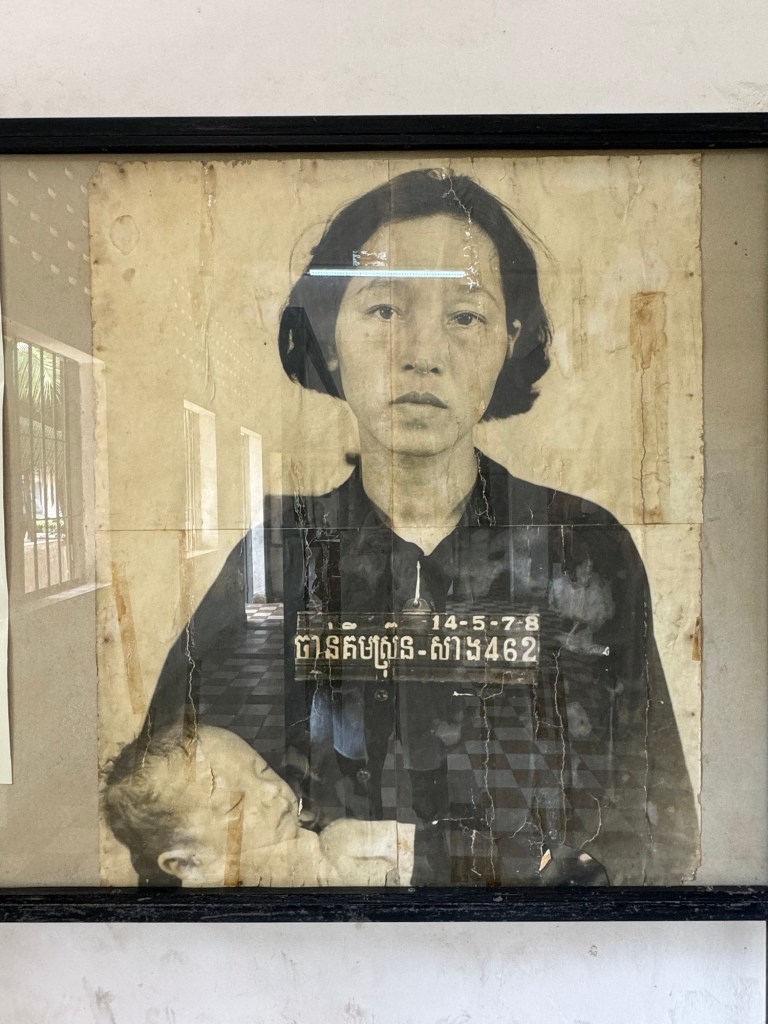

Most of the guards were teenage peasants who had no problem being violent. There were drownings, electric shocks, beatings and whippings. The prisoners didn’t usually survive. The level of abuse that went on here is completely mind-blowing and I won’t go into detail; you can research it on your own if you wish.
Our guide for the day, Rath, gives us a brief history lesson and then we explore the grounds.

The classrooms were divided into small cells, barely big enough to hold one person.
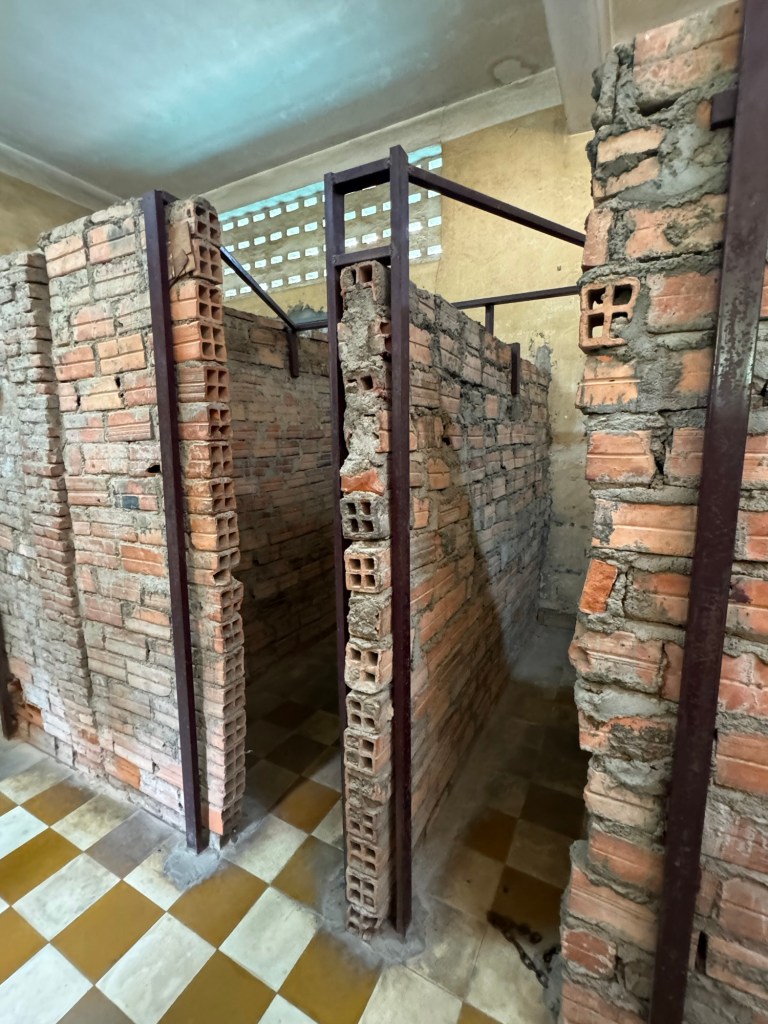
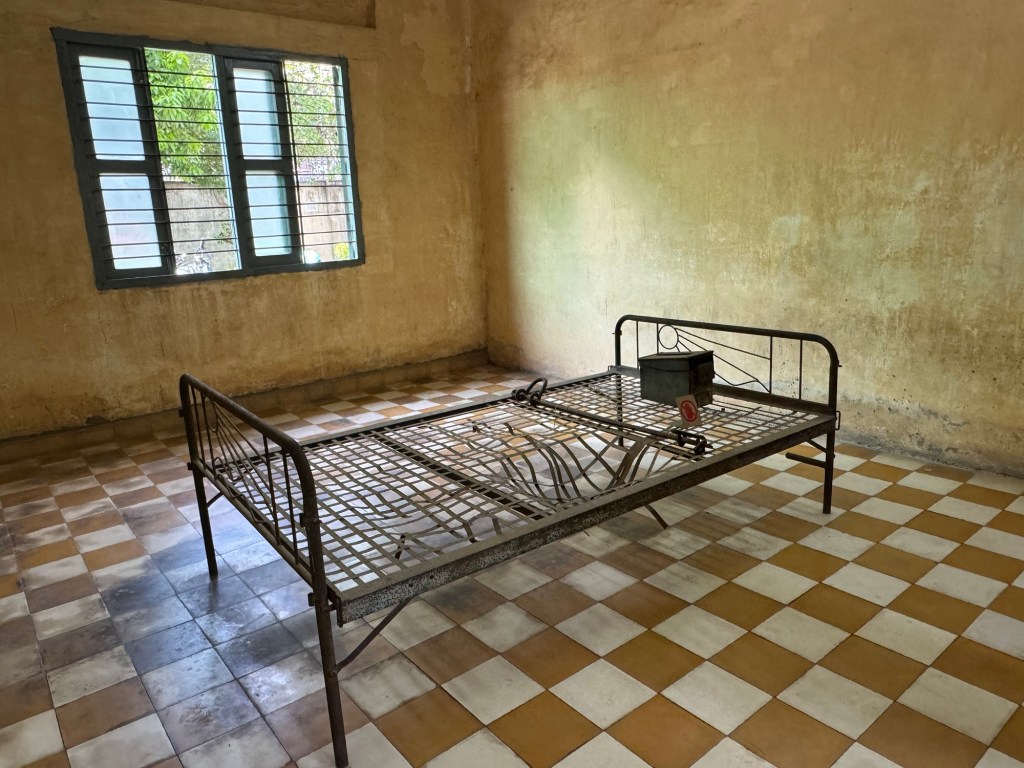
Some prisoners were shackled together in larger rooms. Only 12 people are known to have survived…one of them being Chum Mey, whom I have the pleasure to meet.

Chum Mey, on the far left
He has a booth here at the museum, where he sells his book and connects with us visitors who have come to learn about his history and pay respects. The reason he survived is because he was a mechanic who was able to repair many items for the Khmer Rouge; he was a valuable asset. Originally, Chum Mey fled Phnom Penh when it was stormed but then went back to the city to work as a mechanic. Eventually, he was arrested for no reason and brought to the prison. When the Vietnamese liberated Phnom Penh, he was able to escape with the remaining prisoners and guards. He then escaped from them, hiding in the forest and making his way back to Phnom Penh. He lost his wife and 4 children in the war. It is an honor to meet him today.

Brother Duch, the chairman of the prison, was put on trial and sentenced to life in prison.

After visiting the prison, we get back in the van and drive to the Choeung Ek Killing Fields. This is where many prisoners were brought to be brutally executed. Close to 9,000 bodies were exhumed from this site after the fall of the Khmer Rouge. Each night, a truck escorted prisoners from Tuol Sleng to these fields. They were brought to pre-dug pits and killed.


In order to save ammunition, they were killed with manual weapons or poison. The most horrifying thing here is the killing tree, a Chankiri tree where children were killed by bashing their heads against the trunks.


There are still many graves that have not been excavated yet, and I’m very grateful that we don’t run into any bones or teeth along the way (apparently this is a common occurrence).
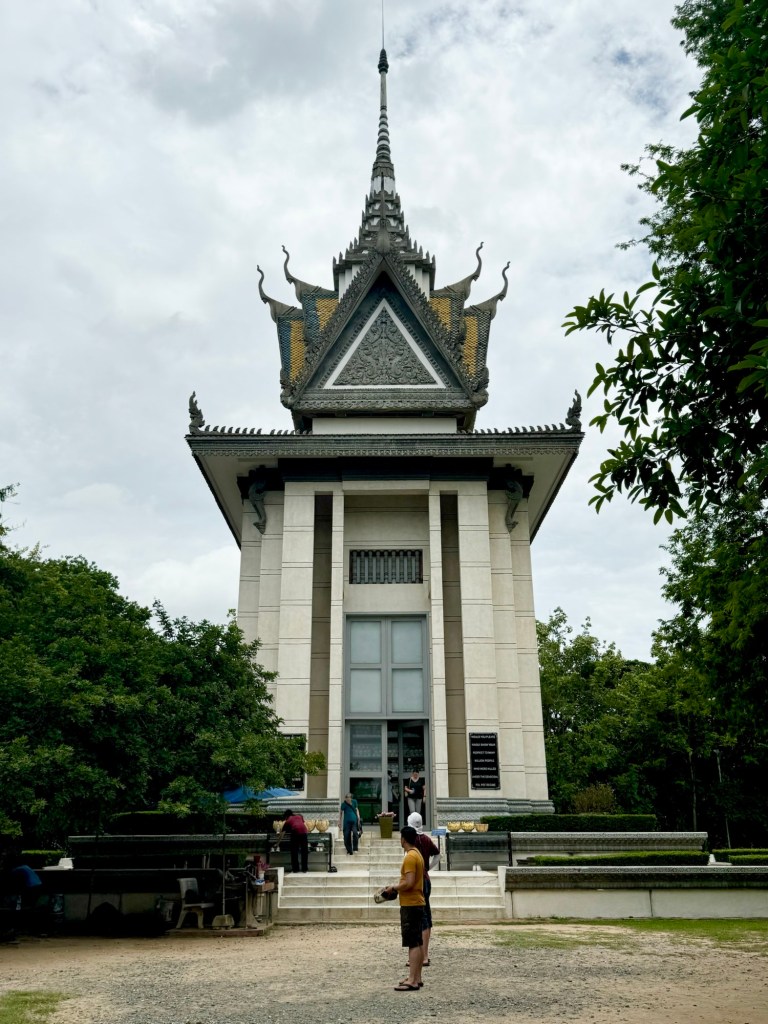
There is a large stupa that holds the clothing, bones and skulls of the victims found here.
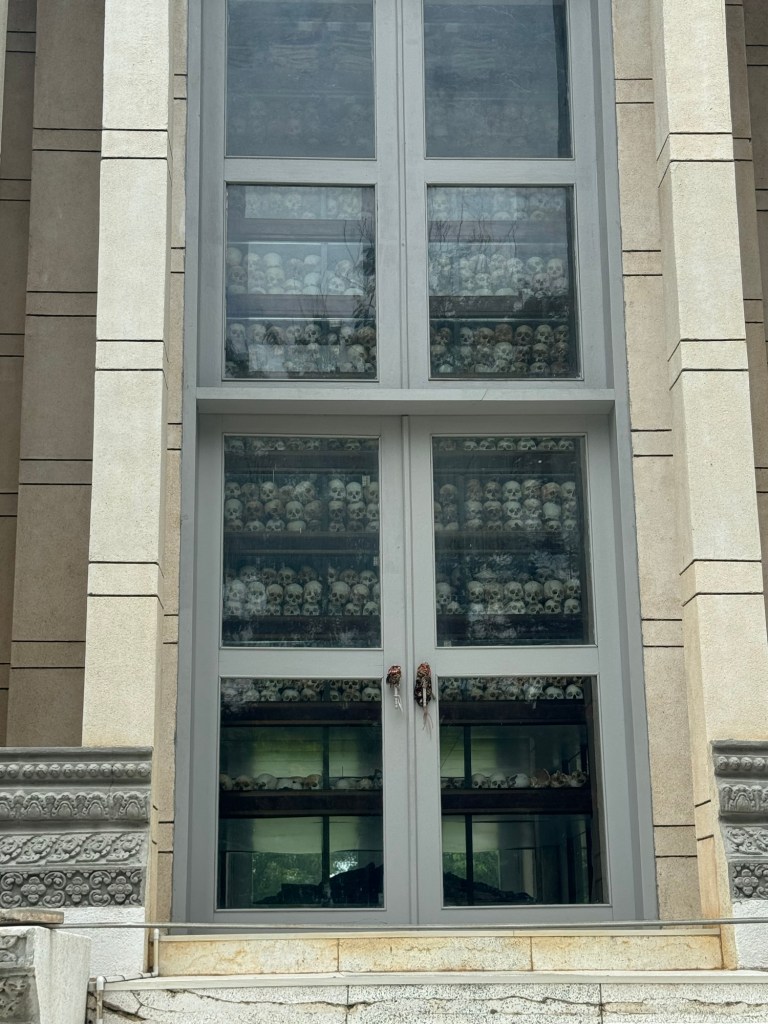
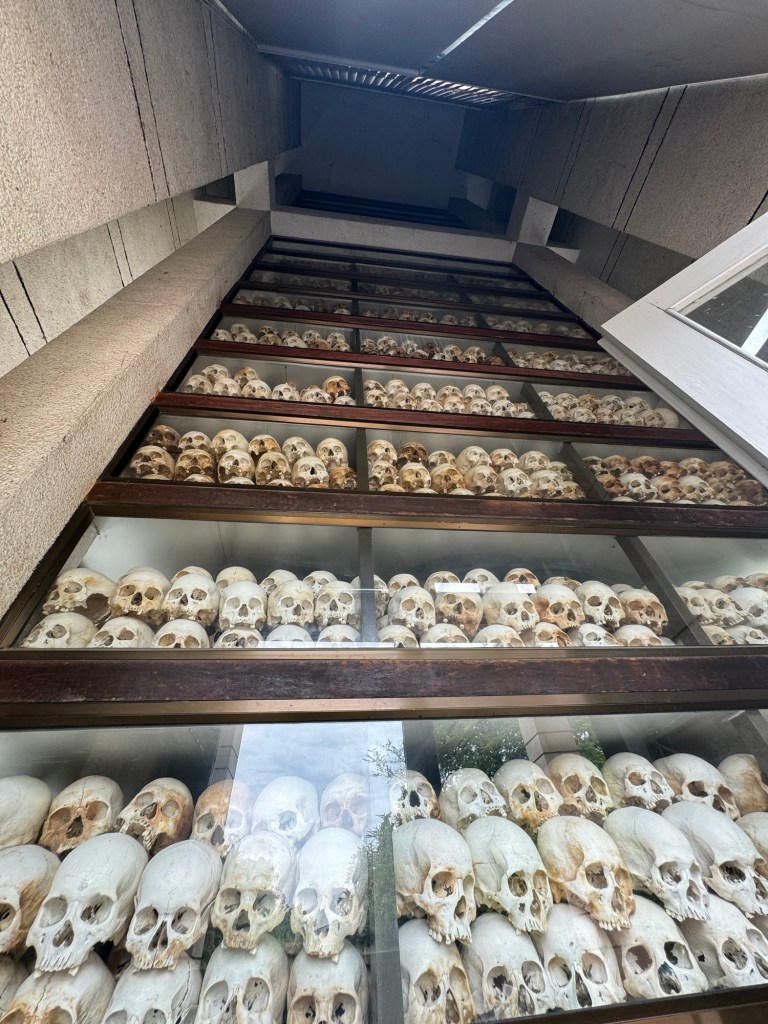
It’s hauntingly beautiful. Even though this has been very sobering morning, it is very important to learn about these historical atrocities so we can better understand and strive towards eliminating this behavior. This is the part of traveling that I cherish the most.

To be continued….
 Everywhere On Earth With Erin